ADL Classic Program Structure
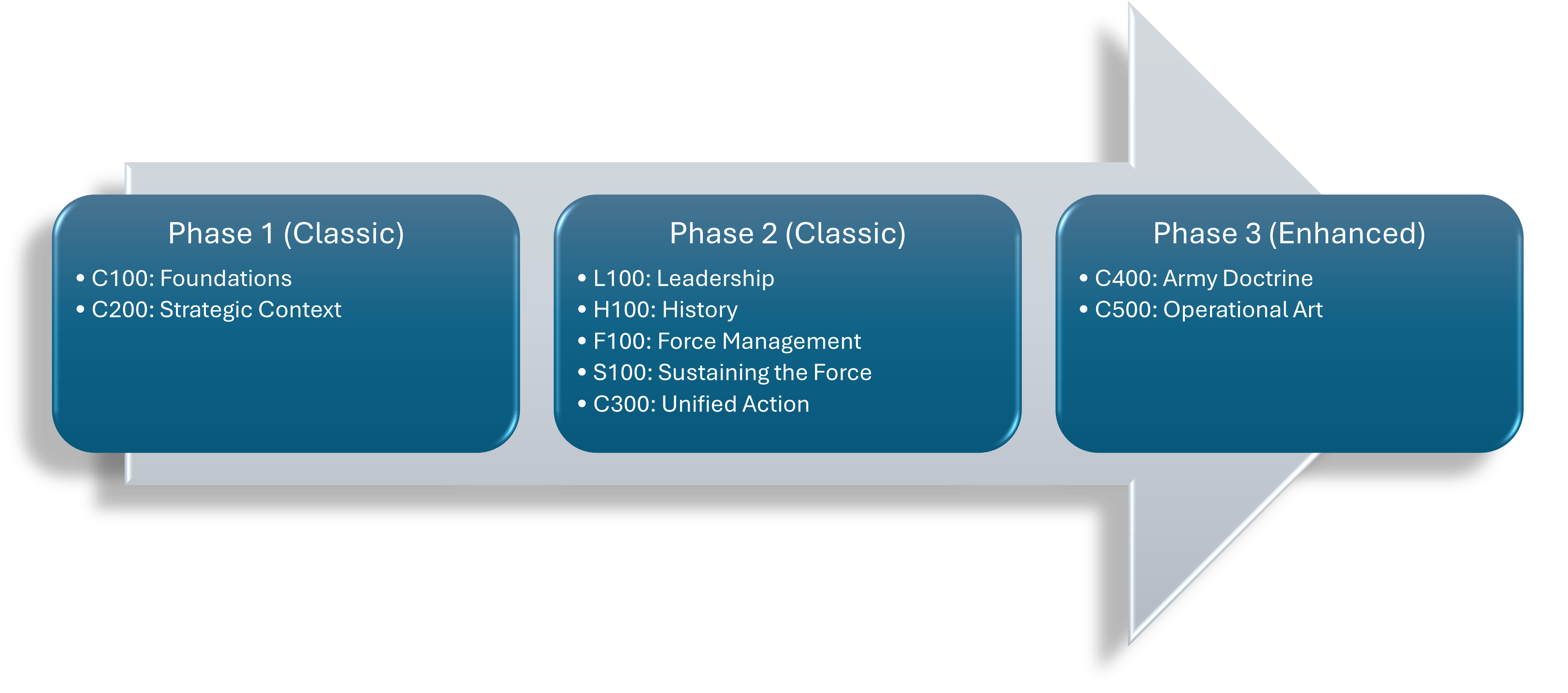
The ADL Classic program is divided into three phases designed for flexible, self-paced learning:
-
Phase 1: 4-6 months | 2 blocks
-
Phase 2: 8-12 months | 5 blocks
-
Phase 3: 4-6 months | 2 blocks
Program Features
-
Complete lessons at your own pace and generally in your preferred order
-
Access to Interactive Computer-Based Instruction
-
Instructor support throughout your journey
-
Assigned cohort advisor in Phase 1
Transition Guidelines
If You Have Completed Phase 1 Only:
-
You will transition to: Phase 2 of the new course
-
Credit retention: All completed material remains credited if less than 18 months have elapsed since course start
-
Important: Students exceeding the 18-month timeframe must restart the program in accordance with DDE Memorandum 1
-
Support: A special bridging cohort has been created to help ensure your successful completion
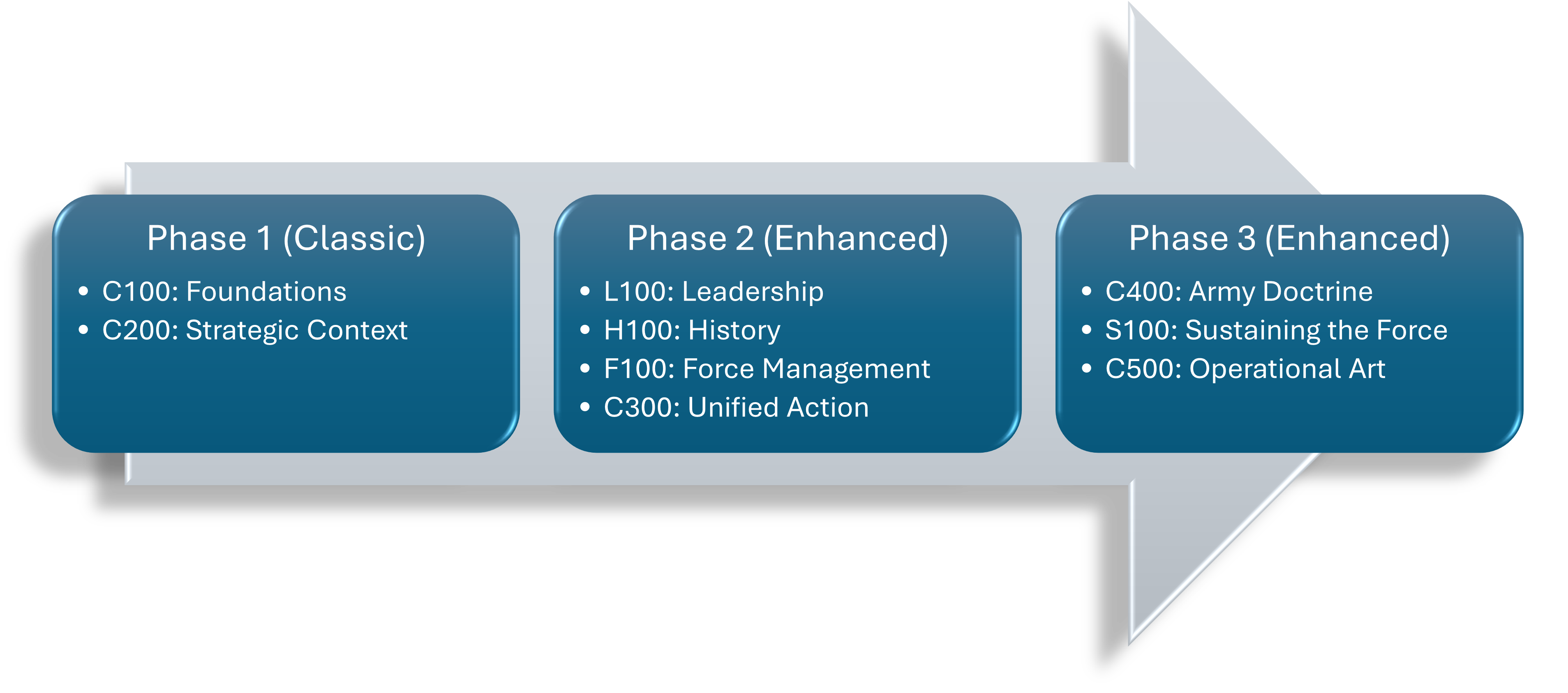
If You Have Completed Phases 1 and 2:
-
You will transition to: Phase 3 of the new course
-
Credit retention: All completed material remains credited if less than 30 months have elapsed since course start
-
Important: Students exceeding the 30-month timeframe must restart the program in accordance with DDE Memorandum 1
Questions about your transition? Contact your cohort advisor for personalized guidance.
Common Core: Exceptional Results
Enhanced ADL Program Structure
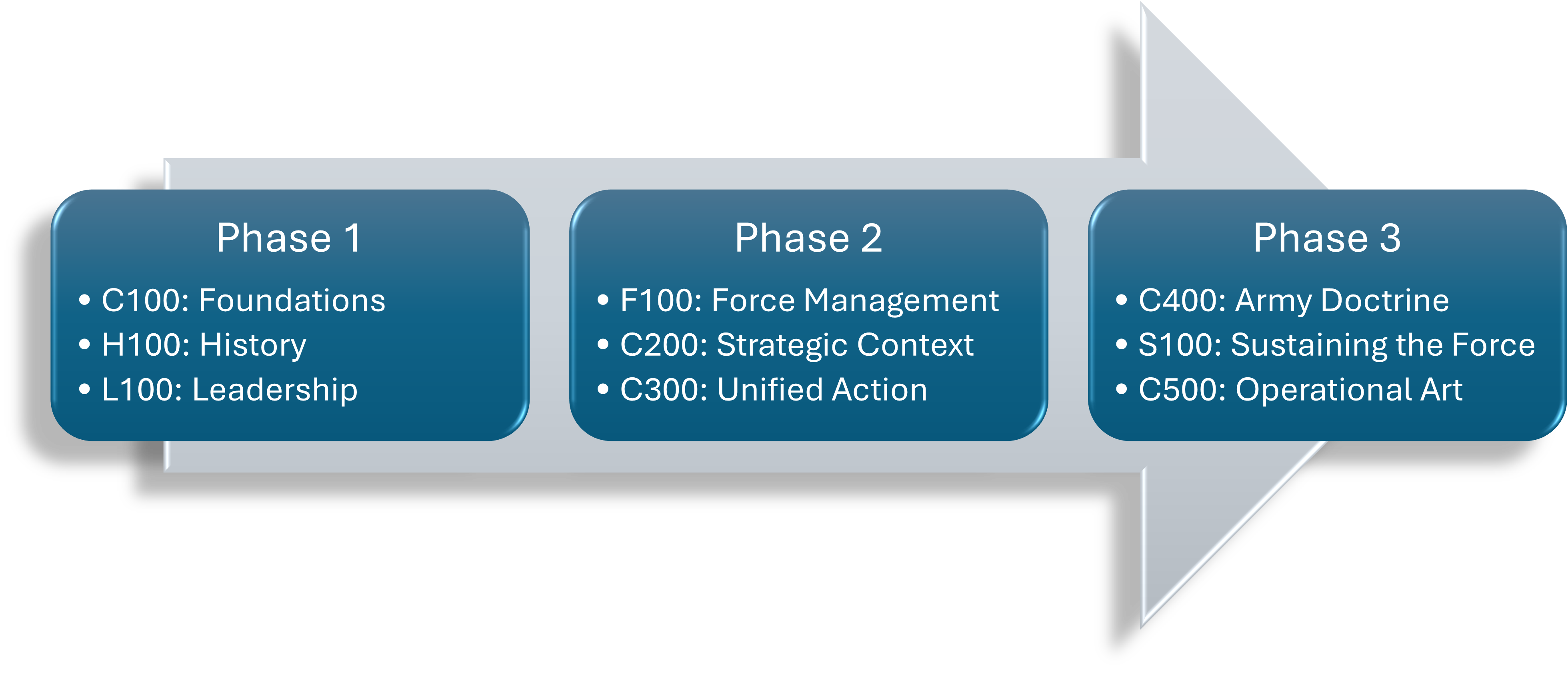
The ADL Common program consists of three four-month phases with three courses per phase. Each phase builds progressively on the previous one, ensuring you achieve all CGSC Program Learning Outcomes through focused, sequential learning.
Key Features
Progressive Learning
Each phase targets specific competency areas. Courses build systematically on previous content to deepen your understanding and practical application.
Flexible Learning Methods
Choose from multiple instructional approaches to meet learning objectives. The program accommodates diverse learning styles and schedules to fit your professional commitments.
Dedicated Support
A cohort advisor is assigned during Phase I and provides guidance throughout the entire program, ensuring your success from start to finish.
This integrated design creates a cohesive learning experience that develops critical leadership skills while offering the flexibility distance learners need.
Common Core: Exceptional Results
Phase I: Foundations (Months 1-4)
Phase I establishes the foundational competencies required for success throughout CGSOC and your career.
C100: Foundations of the Army Profession
Purpose: Examine foundational competencies required for student success during CGSOC and throughout your career to meet the demands of the emerging Operational Environment.
What You'll Study:
Learn more on the Department of Command and Leadership page
H100: Foundations of Modern War 1789-1945
Purpose: Gain a broad perspective on the relationship between military history and efforts by militaries to innovate and adapt.
What You'll Study:
-
Political, social, economic, and technological factors that shaped warfare from the French Revolution through World War II
-
Enduring lessons of military adaptation
-
How historical lessons inform contemporary operational art and strategic decision-making
Learn more on the Department of Military History page
L100: Developing Organizations and Leaders
Purpose: Examine organizational-level leadership and understand the skills necessary to influence and develop both organizations and leaders while accomplishing assigned missions.
What You'll Study:
-
Concepts and processes necessary to lead and improve large organizations
-
Skills necessary to succeed as a field grade leader
-
Environmental considerations influencing organizations
Learn more on the Department of Command and Leadership page
Phase II: National, Strategic, and Operational Framework (Months 5-8)
Phase II develops your ability to apply foundational knowledge to operational and strategic contexts.
F100: Force Management
Purpose: Explore the Force Management Model in terms of primary systems, concepts, and joint/Army processes of change management.
What You'll Study:
-
Resource management to support integrating and maintaining capabilities at the unit level
-
The service as an entity and as part of a Joint Force
-
Identifying gaps and potential solutions
-
Developing, resourcing, and integrating solutions
Learn more on the Department of Sustainment and Force Management page
C200: Strategic Context of Joint Warfighting
Purpose: Build on F100 by introducing operational art, systems perspective, and joint doctrinal concepts.
What You'll Study:
-
Understanding and analyzing the international security environment
-
National and defense strategies
-
Strategic level military problems and challenges
-
U.S. government national security and Department of Defense systems, policies, and concepts
-
How the military element of national power fits within overall national security
Learn more on the Department of Joint, Interagency and Multinational Operations page
C300: Unified Action
Purpose: Understand what capabilities joint service and unified action partners provide to achieve conditions and effects necessary in the Joint Force Commander's plans and operations.
What You'll Study:
-
Fundamentals of unified action
-
Joint functions and the range of military operations
-
How joint forces and unified action partners are integrated and synchronized
-
Capabilities, limitations, and operational considerations of U.S. military services and unified action partners
Learn more on the Department of Joint, Interagency and Multinational Operations page
Phase III: Integration & Mastery (Months 9-12)
Phase III integrates all previous learning and demonstrates mastery through comprehensive application.
C400: Apply US Army Doctrine
Purpose: Build on all previous courses to understand what the Army does and how it does it.
What You'll Study:
-
Army doctrine as the foundation for understanding operations
-
Context of the six joint learning areas
-
Chairman of the Joint Chiefs of Staff Officer Professional Military Education Policy (OPMEP) Learning Areas for CGSOC
Learn more on the Department of Tactics page
S100: Sustaining the Competitive Advantage
Purpose: Develop understanding of the continuity of sustainment support from strategic to tactical levels of war.
What You'll Study:
-
Joint Logistics Enterprise
-
Sustainment doctrine at strategic, operational, and tactical levels
-
Roles, functions, capabilities, and planning considerations for sustainment organizations
-
Enabling unified action and multidomain operations
Learn more on the Department of Sustainment and Force Management page
S100: Sustaining the Competitive Advantage
Purpose: Develop understanding of the continuity of sustainment support from strategic to tactical levels of war.
What You'll Study:
-
Joint Logistics Enterprise
-
Sustainment doctrine at strategic, operational, and tactical levels
-
Roles, functions, capabilities, and planning considerations for sustainment organizations
-
Enabling unified action and multidomain operations
Learn more on the Department of Sustainment and Force Management page
C500: Operational Art and Joint Planning
The CGSOC ADL Capstone Course
Purpose: Synthesize your understanding of operational art and design, and apply joint planning instruction using the Joint Planning Process (JPP).
What You'll Study:
-
Operational art and design (introduced in C200)
-
Joint Planning Process (JPP)
-
Developing, analyzing, and evaluating operational approaches
-
Creating doctrinally complete courses of action for the operational level of war
By Course Completion: You will be able to develop, analyze, and evaluate an operational approach and a doctrinally complete course of action for the operational level of war.
Learn more on the Department of Joint, Interagency and Multinational Operations page
Common Core: Exceptional Results